
Skip to content
  • Free written estimates
  • Local crews
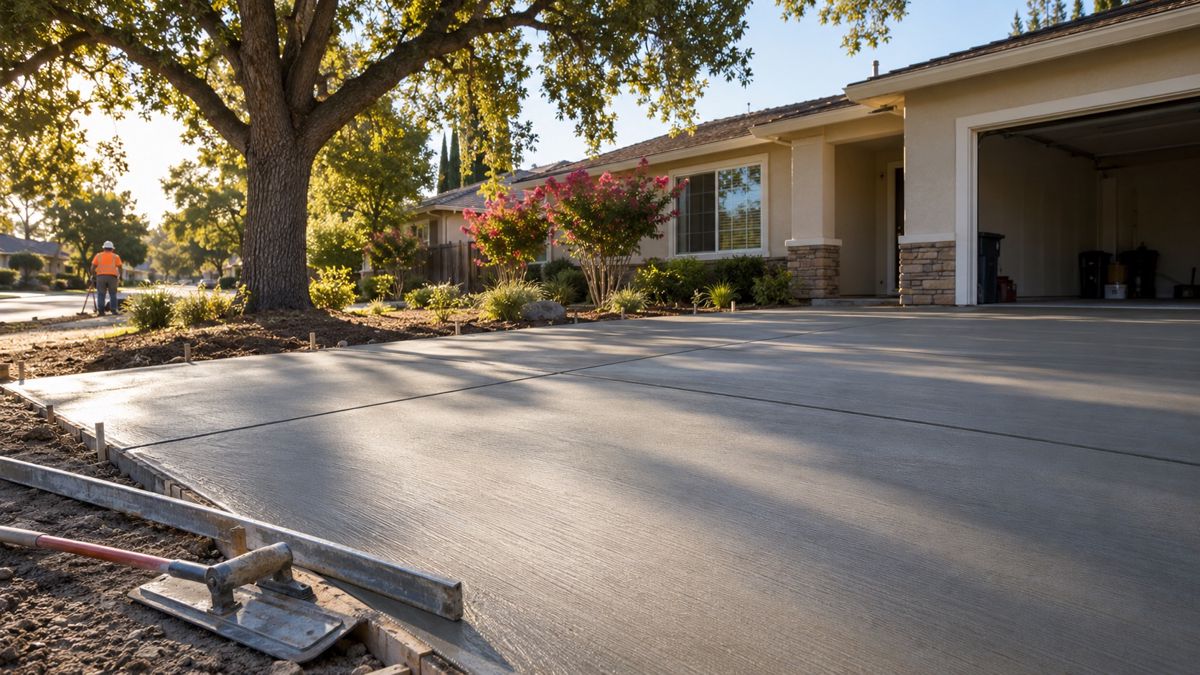
Fresh broom-finished concrete driveway at a Sacramento ranch home

Sloped lots, mature oaks and creek drainage

Concrete walkways, steps and driveways in Citrus Heights

Safe walks, steps and driveways for Citrus Heights homes with mature trees and gentle slopes. Request a quote to confirm availability.

  • Driveways, patios, slabs and walkways
  • Written quote before work starts
  • Crew based in the Sacramento area

Step 1 of 3

What do you need?

  • Free written estimates
  • Local crews
  • Clear timelines
  • Site cleanup included

What Citrus Heights homeowners tend to want from concrete

Citrus Heights lies northeast of Sacramento, with busy roads such as Sunrise Boulevard and Greenback Lane and many quiet streets behind them. A lot of the housing dates from the post-war decades, with ranch homes on lots that have grown shade over the years.

Typical requests involve safer entries, such as replacing broken front steps, adding a handrail-ready landing or reworking a path that has become slippery or uneven. People also ask for driveways that cope with slopes and for patios where a lawn once stood. Hillier lots and leaf litter make slip resistance a bigger concern here than on flat, open ground.

Slopes, shade and moisture around the house

Many lots in this part of the county slope gently toward the street or toward small creeks that cross the area. Water running across a path in winter can undercut edges and leave algae on shaded surfaces. Oaks and pines drop leaves, acorns and needles that stain concrete and hold moisture against it.

For walkways, the finish is as important as the slab. A medium broom texture grips well when wet, while a smooth trowel surface becomes risky. Where a path climbs, we plan the rise and landings so steps are even, because uneven risers are what cause falls.

Services we can quote in Citrus Heights

Each service below is available to Citrus Heights homeowners, once the request confirms scheduling.

Entries are often the starting point, with a driveway or patio added once the first project is complete.

Entry work has to meet practical safety standards, so we check the details before forming.

  • Rise and run. Every step should have the same height and depth, since uneven steps catch feet.
  • Landing size. A door needs a flat area wide enough to open it safely.
  • Drainage. A slight slope keeps water from freezing or sitting in shaded spots.
  • Texture. Broom or light stamped textures give grip in wet leaves and winter rain.

Handrails and guards are required in some cases, and we point out where they are likely to apply.

Permits, tree care and getting the site ready

Replacing front steps and landings may need a permit, especially when height or structure is involved. Citrus Heights has its own city office, and parts of the surrounding area follow county rules, so we ask for your address and confirm which applies.

Before the crew arrives, trim low branches that block access if you can, move planters and sweep off leaf litter. If an oak stands close to the path, tell us. Oaks are protected in some jurisdictions, and digging near their roots can cause lasting harm, so we plan the excavation with care.

What to expect after you ask for a quote

The first step is a short form or a call to (916) 555-0190. We serve Citrus Heights but do not operate a yard there, so the request confirms whether we can fit your job into our schedule.

  1. Send photos of the path or steps from the front and from the side, with a tape measure in view if possible.
  2. We visit, measure the rise, check drainage and discuss textures.
  3. You receive a written quote with a sketch of the new layout.
  4. We demolish and haul off the old concrete, form the new walk and pour.
  5. Once it has set, we remove the forms, backfill the edges and review care steps.

Step 1 of 3

What do you need?

Questions about Citrus Heights

How do you make concrete steps less slippery?
The finish does most of the work. A broom texture gives a fine, gritty surface that grips in the rain, and a light stamped texture can do the same. Sealers can reduce traction, so we choose products with an anti-slip option for steps. Keeping leaves and algae off the surface also makes a real difference.
Can you repair crumbling steps instead of rebuilding them?
If the steps are structurally sound and the damage is limited to chipped edges or surface wear, patching and resurfacing can work well. If they are tilting, hollow underneath or cracked through, rebuilding is safer. We tap, measure and probe the steps, then explain which approach is realistic. A short visit is usually enough to tell the two situations apart.
Will tree roots damage a new walkway?
They can. Roots follow moisture and will lift thin concrete over time. We reduce the risk with a firm base, steel reinforcement where it makes sense and joint placement that lets the slab move without cracking. In some places, bending the path around a major root is wiser than cutting it.
How wide should a front walkway be?
A path that two people can share comfortably is a common aim, and a wider one makes carrying groceries or equipment easier. Local rules and the lot layout set the limits. We measure the area, show you options on site and keep the width consistent so the walk looks balanced against the house.
Do you pour concrete in wet winter weather?
Light rain can usually be managed with covers, but heavy rain ruins a surface that is still soft. If the forecast looks wet, we reschedule rather than risk a poor finish. In the rainy months we also protect fresh concrete with plastic or blankets and explain when it is safe to walk on.

Ready when you are

Call now or request a quote online.

(916) 555-0190