
Skip to content
  • Free written estimates
  • Local crews
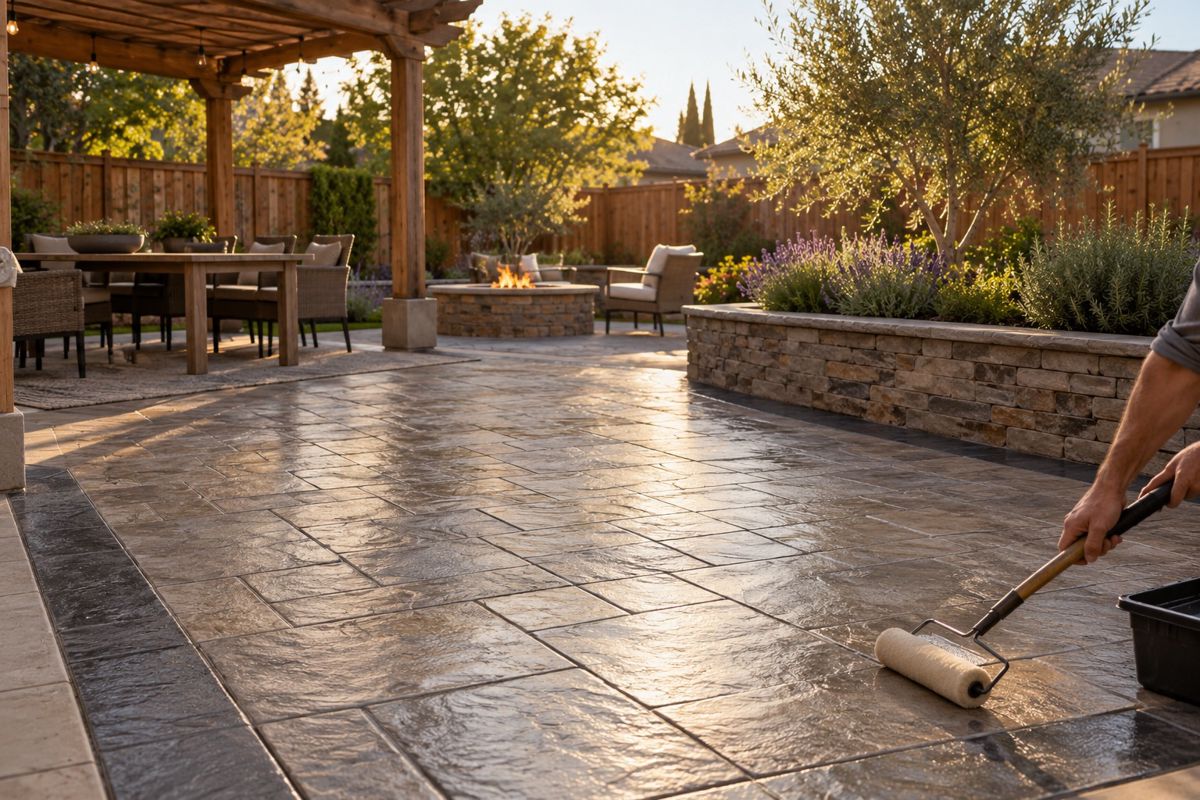
Stamped slate pattern concrete patio with fire pit in a backyard

Stamped patios in Sacramento

Stamped concrete patio design and installation in Sacramento

Slate, stone, brick and wood looks for Sacramento backyards, at a lower upkeep than real stone. We quote in writing.

  • Pattern and color samples to choose from
  • Sealed for sun and foot traffic
  • Backyards, entries and pool decks

Step 1 of 3

What do you need?

What is a stamped concrete patio and how is it made?

A stamped concrete patio is a regular slab with a pattern pressed into the surface while it is still soft. Rubber mats imitate slate, flagstone, brick, cobblestone or wood planks. Color is added to the mix or brushed on top, and a release powder keeps the mats from sticking.

After the pattern sets, the crew cuts joints, washes off the powder and applies a sealer. The result looks like natural stone but is one continuous slab. That makes it easier to sweep and hose clean than pavers, with no gaps for weeds.

For a Sacramento stamped concrete patio, the base and thickness still matter as much as the pattern. A four-inch slab on compacted rock with proper joints is the usual starting point.

Which patterns and colors suit Sacramento homes?

Mid-century ranch homes in older neighborhoods often suit warm gray slate or a soft tan flagstone. Newer stucco homes in Natomas and Elk Grove look good with a gray ashlar pattern or a clean border and a plain center.

Lighter colors stay cooler under the sun. Dark browns and charcoals look rich but get hot by afternoon, which matters for bare feet. You can also pick a pattern with a smooth border to frame the shape of the yard.

Bring photos of what you like. We can show samples and talk through a layout that fits your fence, pergola, fire pit or outdoor kitchen. If you also want a new drive, see concrete driveways.

How do Sacramento heat and sun affect stamped concrete?

Summer afternoons here are dry and hot, and that affects the work in two ways. Stamping has a narrow window while the surface is soft, so crews start early and may use a retarder to slow the set. The surface must also be protected from drying too quickly.

After the job, sun and foot traffic wear the sealer. Plan to reseal every two to three years to keep the color deep and the surface easier to clean. Skipping the sealer lets the color fade and stains soak in.

Near a pool, ask for a slip-resistant additive in the sealer. A cool-deck coating can also make the surface more comfortable on hot days. Both are simple add-ons that we can include in your quote.

Price depends on the size, the pattern, the number of colors, the shape of the edge and how much demolition is needed. Raised sections, steps and curved borders add labor. A simple one-color pattern is usually easier to quote than a layered, multi-tone design.

Most patios take three to five days from start to finish. The slab is poured and stamped in one day. Washing and sealing come a few days later, once the concrete has cured enough. You can usually walk on it after two days and set furniture after about a week.

Call when you are planning a backyard remodel, a pool, or when an old patio is cracked or stained. For patios that need fixing, see concrete repair and resurfacing. Our home page lists everything we do.

What should you ask before choosing a stamped concrete crew?

Stamping is a skill, and results vary. Ask to see photos of finished patios and, if possible, one that has been in the sun for a few summers. Look at how the joints fall and whether the color looks even.

Ask what sealer the crew uses, how often it needs reapplying, and whether a slip-resistant additive is included. Ask how the crew handles the heat in July and August.

Finally, confirm the details in writing: the pattern, the colors, the size, the thickness and the cleanup. Samples are small, so ask for a larger sample board or a photo of a similar finished job before you decide.

  • Free written estimates
  • Local crews
  • Clear timelines
  • Site cleanup included

How it works

1

Tell us about the project

Size, finish and goals.

2

Site visit and quote

We measure and price it in writing.

3

Form, pour, finish

Base, forms and finish done in the right order.

Step 1 of 3

What do you need?

Questions about concrete in Sacramento

Does stamped concrete crack?

It can, like any concrete. Control joints placed along the pattern lines guide the cracking so it is less visible. A firm base and good curing reduce it. Hairline cracks can often be filled and sealed later.

How often does a stamped patio need sealing?

Most sealers last two to three years with outdoor sun and foot traffic. Surfaces that look dull, dry or patchy are ready for a fresh coat. Cleaning first and applying a thin coat gives the best result.

Is stamped concrete slippery when wet?

A glossy sealer can be slick. For patios, steps and pool decks, we can add a slip-resistant grit to the sealer and choose a textured stamp pattern. Tell us if kids or older relatives use the space.

Can stamped concrete go over my old patio?

Sometimes. If the old slab is flat and sound, a thin stamped overlay can work. Heavily cracked or sunken slabs are better removed so the new surface does not fail again.

Is stamped concrete cheaper than pavers or stone?

Often it costs less than natural stone and many paver systems, and it has no joints for weeds. Pavers are easier to lift and repair in sections. We can walk through the trade-offs for your yard.

Ready when you are

Call now or request a quote online.

(916) 555-0190