
Skip to content
  • Free written estimates
  • Local crews
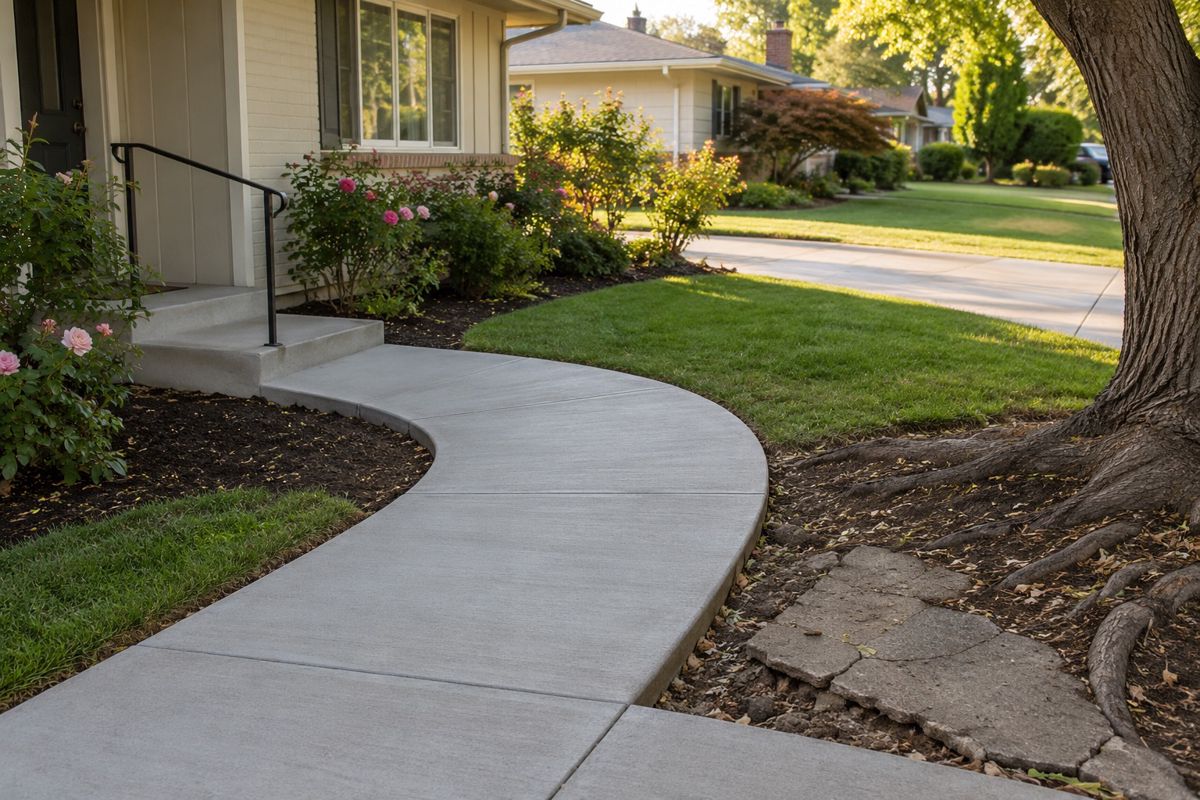
New concrete walkway and steps leading to a ranch home porch

Walkways and steps in Sacramento

Concrete sidewalks and walkways in Sacramento

New paths, entry walks, steps and trip-hazard replacements for Sacramento homes. Clean joints, even surfaces and a written quote.

  • Entry walks, side paths and steps
  • Tree-root damage replaced properly
  • Written quote before work starts

Step 1 of 3

What do you need?

What is the difference between a walkway and a sidewalk?

A walkway is a path on your own lot, such as the route from the driveway to your front door or around the side of the house. A public sidewalk sits between the street and your property line. The sidewalk is in the public right of way, so work there usually needs city or county approval and must meet their standards.

For concrete sidewalks in Sacramento, ask who is responsible for your section and what permit applies before you hire anyone. We help you check for your address. On your own property, the rules are simpler and the design is up to you.

Walkways are typically about four inches thick with a broom finish. Stamped or colored finishes are an option for entries.

Why do sidewalks lift and crack, and what can be done?

Tree roots are the leading cause on older streets. Mature trees in Land Park, East Sacramento and Curtis Park push up slabs as the roots grow. This creates trip hazards, and a slab that rises half an inch can catch a foot.

Other causes include poor drainage, soil that settles, and slabs poured too thin. Clay soil moves with the seasons, so the base under a walk needs to be compacted rock, not bare dirt.

The fix depends on the damage. A slightly raised edge can sometimes be ground down. A badly lifted or broken section is usually cut out and replaced. We trim or protect roots only where it is safe, and you or the tree owner should approve before any cutting. See concrete repair and resurfacing for lighter fixes.

What changes the price of a walkway or steps?

Small jobs cost more per square foot than large ones, because setup and truck time stay the same. These factors matter most.

  • Length, width and the number of curves.
  • Demolition and removal of old concrete.
  • Tree roots and the extra work to deal with them.
  • Steps, landings and railings.
  • The finish, such as broom, stamped or colored.
  • Access for the truck and the need to carry concrete by wheelbarrow.
  • Permits for work in the public right of way.

Building codes set rules for step height, depth and handrails, so ask any contractor how they will meet them. A clear written quote lists each of these items, so you can compare fairly.

Most walkways take one to three days. Old concrete is removed, the base is built, forms go up and the pour happens in one morning. Steps need extra time for forms. You can usually walk on the new path after a day or two, and heavier use after a week.

On the day, plan a different route into the house. The crew will mark the area with stakes and tape. Keep pets and children off the wet surface.

Call when you notice a lifted edge, a path that holds water, or steps that feel uneven. Call early if a new concrete driveway is coming, because the walk should meet it neatly. You can see everything we do on the home page.

What should you check before replacing a sidewalk?

Start with who owns the problem. If the damage is at the street, call the city or county and ask about the process, any permit, and whether they offer a repair program. Ask what standards apply to the new slab, such as thickness, slope and joint spacing.

Look at the cause. If a tree root lifted the slab, decide what to do about the root first. If water pools on the path, plan for a better slope.

Take photos of the damage before work starts. Share them with your contractor and, where it applies, with the city. A clear record helps if questions come up later about what was repaired.

  • Free written estimates
  • Local crews
  • Clear timelines
  • Site cleanup included

How it works

1

Tell us about the project

Size, finish and goals.

2

Site visit and quote

We measure and price it in writing.

3

Form, pour, finish

Base, forms and finish done in the right order.

Step 1 of 3

What do you need?

Questions about concrete in Sacramento

Who is responsible for the sidewalk in front of my house?

It depends on the city or county rules and the situation. Responsibility can differ between a street tree, a damaged section and normal wear. Contact the city or county for your address before you start work.

Can you fix a trip hazard without replacing the slab?

Sometimes. A small lip can be ground smooth. A slab raised by roots or sunk by settling often needs to be cut out and replaced. We look at the damage and tell you which option fits.

How wide should a concrete walkway be?

Many entry walks are three to four feet wide. Four feet is more comfortable for two people side by side. Wider paths cost more. We can lay out the width on site with stakes and string.

Do concrete steps need a railing?

Building codes set rules for steps, including height, depth and handrails once there are enough risers. The rules depend on the structure. Ask us and we will check what applies to your steps.

Will tree roots damage my new walkway again?

They can. A deeper rock base, a thicker slab, and careful root work lower the risk. Some roots cannot be cut without harming the tree. We tell you honestly what is practical on your lot.

Ready when you are. Call now or request a quote online.